Strength training for older adults can start with movements and resistance appropriate to your current ability. You do not have to begin with heavy weights or a demanding gym routine. The first step is choosing a manageable starting point, especially if you have health conditions, have been inactive or are worried about balance.
The goal may be very practical: getting out of a chair, carrying shopping or feeling more confident on steps. Explain those aims when asking about exercise support. They give the instructor or clinician something meaningful to plan around.
Village Physiotherapy offers seniors conditioning classes and strength and conditioning in Farnborough Village, Orpington. Here is how to choose an appropriate starting format.
Why consider strength training for older adults?
Strength is relevant to many ordinary tasks, but walking, strength work and balance practice are not interchangeable. A useful routine considers what you need to improve rather than assuming one favourite activity covers every aim.
The NHS physical activity guidelines for older adults recommend activities for strength, balance and flexibility on at least two days each week, alongside suitable aerobic activity and less prolonged sitting. They also advise speaking to a GP first if you have not exercised for some time or have medical conditions or concerns.
These are general population recommendations, not an instruction to immediately copy an unfamiliar workout. Your starting level and how you build up should reflect your circumstances. A professional can help you work out what the guidance means in practice for you.
Choose a goal you can recognise
Start with one or two tasks you would like to manage more easily. “Get stronger” is a useful overall aim, but “stand from my usual chair more confidently” is easier to discuss and review.
Other goals might include carrying a modest shopping bag, standing for household tasks or feeling steadier during a familiar walk. Explain where you currently need help, what you avoid and what you would like to attempt again.
Your goals do not have to match another person’s. Someone already active may want to develop a gym routine, while someone returning after illness may need a more supported beginning. A suitable programme should leave room for both starting points without comparison or pressure.
Class, small group or individual coaching?
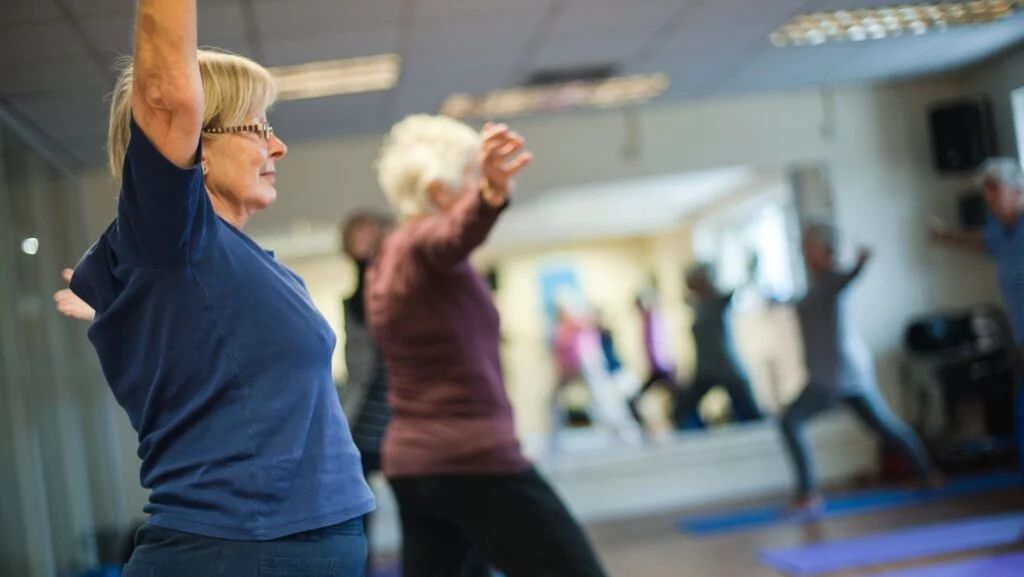
A class can provide structure and company. It may suit you if the activities and level of support match your needs. Ask how exercises are adapted and whether you need an assessment before joining.
Individual coaching allows more time to explore your goals and practise unfamiliar movements. A smaller group may be another option where suitable. The format matters less than whether you can participate safely and understand the instructions.
At Village Physiotherapy, seniors conditioning includes a range of strength, balance and general exercise activities. Our strength and conditioning service also offers individual and small-group coaching. Contact reception for current arrangements and availability rather than assuming a particular timetable or group size remains unchanged.
What should you tell the instructor or clinician?
Share relevant medical conditions, medicines, recent surgery and any current pain or dizziness. Mention falls and near falls, even if you were not injured. The information helps decide whether a class is appropriate or whether an individual assessment should come first.
Useful questions include:
- Do I need medical advice or a physiotherapy assessment before starting?
- Can the exercises be adapted to my current ability?
- Will I need to get on and off the floor?
- What support is available for standing and balance activities?
- How will I know when to make an exercise harder?
- What symptoms mean I should stop and seek help?
If you use a walking aid, hearing aid or glasses, explain how these affect participation. Ask about access, seating and footwear so practical uncertainty does not get in the way of starting.
What might beginner strength work look like?
Depending on the assessment, a programme might use body weight, resistance bands, gym equipment or light external weights. The right exercise is one that suits the aim and can be performed with the agreed support and technique.
You should understand how to set up, move and finish safely. If you cannot remember the instructions, ask for another demonstration or a written reminder. Guessing how to use equipment is not part of the learning process you need to accept.
Do not treat another participant’s resistance or repetition count as your target. Ask how the effort should feel for you and what response is expected afterwards. Progress can involve several changes, and you do not need to increase every part of the programme at once.
Strength and balance need safe practice
If balance is a concern, tell the instructor before trying a standing exercise. Ask what support to use and whether another person should be nearby. Do not copy a challenging single-leg exercise from a video beside stairs or unstable furniture.
Falls or new unsteadiness may need assessment rather than simply a harder workout. The appropriate response depends on the circumstances, including any dizziness, injury or change in health. Explain these concerns when booking rather than waiting until a class is under way.
If an individual movement problem or pain is limiting you, our physiotherapy service may be a more useful starting point. Exercise support can then be considered in the light of the findings and your goals.
Build a routine that fits your week
A sustainable plan takes account of travel, other appointments, fatigue and caring responsibilities. Discuss what you can realistically do rather than agreeing to a programme you already know will be difficult to maintain.
Ask which exercises are priorities between supervised sessions and how much rest is appropriate. Keep a simple record if that helps you remember the plan and describe how you responded. If symptoms change or an exercise feels wrong, contact the relevant professional rather than forcing the next planned increase.
Review the practical goals as well as the exercise numbers. Being able to use a familiar step more confidently can be meaningful progress even before you move to a heavier resistance. If a goal remains difficult, the plan should be reconsidered rather than judged as a personal failure.
Start strength work in Orpington
Strength training for older adults should begin with a clear goal, a suitable level of support and a plan you understand. You can ask for guidance without committing to a demanding class or buying equipment first.
Contact Village Physiotherapy or call 01689 851143 to discuss seniors conditioning, individual coaching or whether a physiotherapy assessment would be appropriate. Tell reception what you would like to manage more easily and any health or access needs to consider.
Village Physiotherapy
Specialist physiotherapy in Farnborough Village, Orpington. Meet our physiotherapy team.
This article is general information and is not a substitute for an individual assessment.